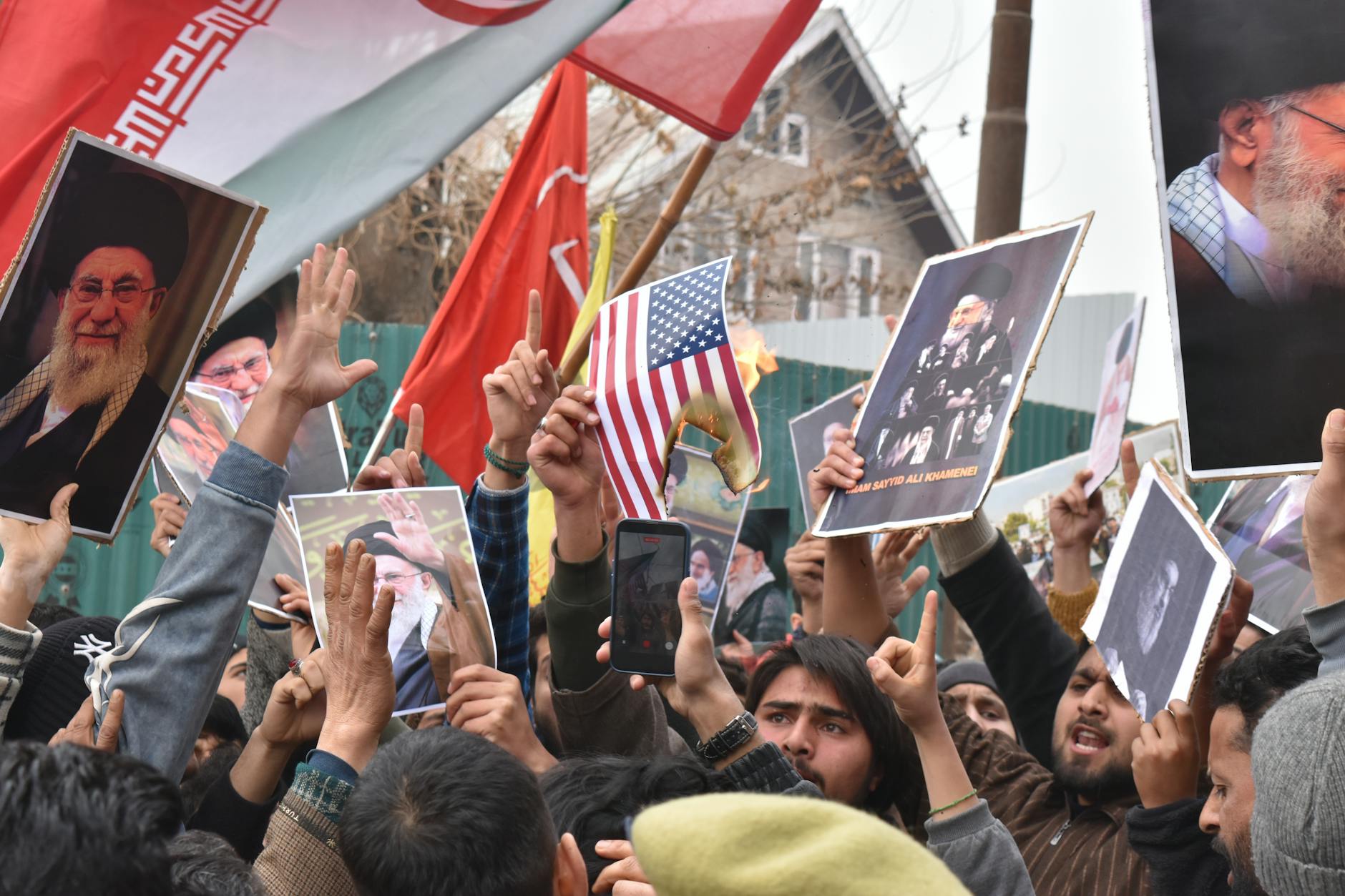
US-Iran Talks Pause Without Breakthrough: A Deep Dive into the 5 Reasons for Failure
The latest round of high-stakes diplomatic negotiations between the United States and Iran, held in Islamabad, Pakistan, has concluded without a breakthrough. After a marathon 21-hour session, deep-seated divisions on fundamental issues forced a pause, leaving the future of the 2015 Joint Comprehensive Plan of Action (JCPOA), commonly known as the Iran nuclear deal, in continued limbo. While both sides have indicated a willingness for future discussions, the failure in Islamabad underscores the profound mistrust and conflicting strategic priorities that define this decades-long confrontation. Here, we analyze the five primary reasons why these critical talks failed to yield an agreement.
1. Irreconcilable Differences on Nuclear Commitments and Uranium Enrichment
At the heart of the stalemate lies the core issue of Iran’s nuclear program. The original JCPOA imposed strict limits on the level and stockpile of enriched uranium to extend Iran’s “breakout time”—the period needed to produce enough fissile material for one weapon—to over a year. Since the U.S. withdrawal in 2018, Iran has dramatically escalated its activities, enriching uranium up to 60% purity and accumulating stocks far beyond the deal’s limits.
In Islamabad, the U.S. demanded a full rollback of these advancements to the original JCPOA parameters. Iran, however, insisted on maintaining some of its advanced capabilities as a bargaining chip and a form of leverage gained during the U.S. “maximum pressure” campaign. Bridging this gap—between a demand for complete reversal and a refusal to relinquish hard-won technological ground—proved impossible, forming the first and most significant roadblock.
2. The Scope and Sequence of Sanctions Relief: A “Who Goes First?” Dilemma
Sanctions relief is Iran’s primary demand and the promised benefit of the JCPOA. The failure here revolves around scope, verification, and sequence.
- Scope: Iran demands the removal of all sanctions re-imposed or levied by the U.S. since 2018, including those related to terrorism and human rights. The U.S. is only willing to lift nuclear-related sanctions, seeking to maintain other pressure tools.
- Sequence: This is a classic diplomatic chicken-and-egg problem. Iran insists on verified sanctions lifting before it scales back its nuclear program. The U.S. and its European allies demand significant nuclear rollbacks before providing substantial economic relief. The lack of trust makes a simultaneous, coordinated action plan exceptionally difficult to design and agree upon.
3. Unresolved Issues of Frozen Assets and Financial Guarantees
Closely tied to sanctions is the contentious issue of billions of dollars in Iranian assets frozen in foreign banks, primarily due to U.S. secondary sanctions that deter international financial transactions with Iran. Iran views the full and unfettered access to these funds as a tangible test of U.S. seriousness.
In Islamabad, disagreements persisted over the mechanism for releasing these funds and, more critically, over future guarantees. Iran, burned by the sudden U.S. withdrawal from the JCPOA under the Trump administration, seeks ironclad assurances that a future U.S. president cannot unilaterally renege on the deal again. The U.S. political system cannot legally bind a future administration, making this a near-insurmountable demand and eroding the foundation for compromise on financial matters.
4. Regional Security and Control: The IAEA Investigation Stalemate
Beyond the bilateral nuclear-for-sanctions swap, the U.S. and its allies pushed for a broader agenda, which Iran flatly rejected. A key point of contention was the closure of investigations by the International Atomic Energy Agency (IAEA) into undeclared nuclear material found at several old sites in Iran.
The West insists that these investigations must be resolved for the sake of the non-proliferation regime’s integrity. Iran dismisses them as politically motivated and refuses to address them as part of the nuclear talks, viewing this as an overreach and an infringement on its sovereignty. This deadlock reflects a larger struggle: the U.S. aims for a deal that addresses broader security concerns, while Iran wants a limited agreement focused solely on sanctions relief.
5. Maritime Security and Proxy Activities: The Unspoken Agenda
While not always explicitly on the public negotiating table, the shadow of Iran’s regional activities and its support for proxy groups across the Middle East loomed large over the Islamabad talks. For the U.S. and its regional allies like Israel and Saudi Arabia, Iran’s ballistic missile program and its influence in Yemen, Syria, and Lebanon are inseparable from the nuclear threat.
Indirectly, there were likely discussions or demands for assurances on regional de-escalation, particularly regarding maritime security in the Gulf. Iran, which views its regional alliances as vital to its national security and strategic depth, is unwilling to negotiate them away in nuclear talks. This fundamental disconnect—where one side seeks a comprehensive behavioral change and the other a specific technical agreement—ensured that even 21 hours of talks could not narrow the overarching strategic divide.
Conclusion: A Pause, Not an End
The failure in Islamabad is a stark reminder that the structural enmity between the U.S. and Iran cannot be resolved in a single diplomatic sprint. The five reasons outlined—nuclear thresholds, sanctions sequencing, financial guarantees, IAEA oversight, and regional influence—are interconnected layers of a deep-rooted conflict.
The “pause” indicates that channels remain open, likely for lower-level technical discussions. However, the path forward is fraught. Domestic political pressures in both Washington and Tehran limit concessions, and the regional security landscape remains volatile. For now, the world is left with a dangerous status quo: an Iran steadily advancing its nuclear capabilities and a West relying on economic pressure and diplomatic stalemate, with the risk of escalation