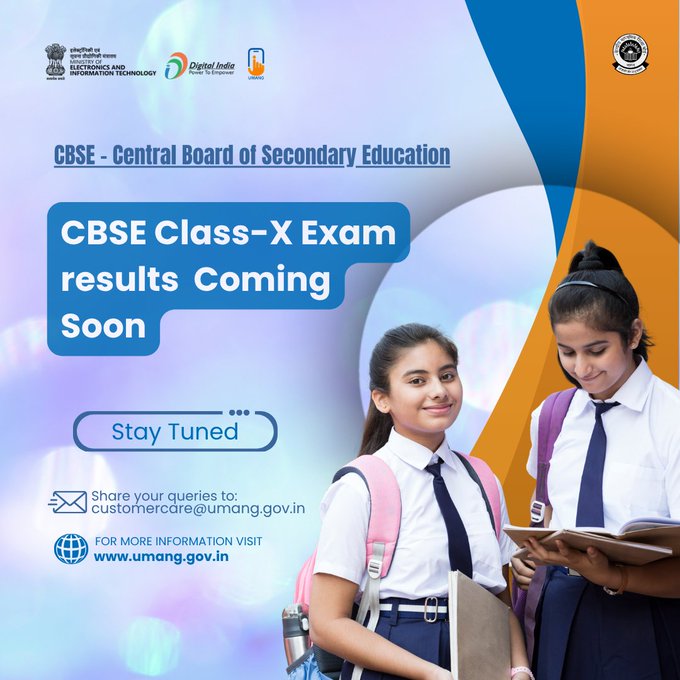
On April 15, 2026, at precisely 4 pm, the Central Board of Secondary Education (CBSE) officially declared the Class 10th board examination results, marking a significant moment for millions of students across India and abroad. This year’s announcement continued the board’s strong push towards a fully digital ecosystem, with the DigiLocker and UMANG (Unified Mobile Application for New-age Governance) apps serving as the primary, recommended platforms for accessing digital marksheets. This strategic move underscores a transformative shift in how educational credentials are disseminated and stored, prioritizing security, accessibility, and convenience in the digital age.
The Digital-First Approach: DigiLocker and UMANG Take Center Stage
In a decisive step to manage the immense traffic that typically crashes result portals, CBSE designated DigiLocker and the UMANG app as the main channels for the 2026 Class 10 results. This approach is designed to ensure a smoother, more reliable experience for students and parents during the critical hours following the declaration. Both platforms, being integral parts of the Indian government’s Digital India initiative, are built on robust infrastructure capable of handling millions of concurrent requests, thereby minimizing the frustration of website downtime or slow loading speeds.
Accessing Your Results: A Step-by-Step Guide
To retrieve their digital marksheet, students needed their valid login credentials for either DigiLocker or UMANG. Crucially, the process has been further streamlined for those who have registered for the Automated Permanent Academic Account Registry (APAAR) – the ‘One Nation, One Student ID’ initiative. Students with an APAAR-linked account could seamlessly access their results through these platforms, as their academic data is integrated into the system. For others, standard login details sufficed.
The process is straightforward:
- Download and open the DigiLocker or UMANG app, or visit the DigiLocker website.
- Log in using your registered mobile number and password, or via OTP verification.
- Navigate to the ‘Education’ or ‘CBSE’ section within the app.
- Search for and select the “CBSE Class 10th Marksheet 2026” option.
- Enter the required details such as your roll number, date of birth, or other credentials as prompted.
- Your digital marksheet will be displayed and available for download in a secure PDF format.
The Advantages of Digital Marksheets
The digital marksheet issued via DigiLocker is not merely a scanned copy but a legally recognized document equivalent to the original, as per the Information Technology Act, 2000. It contains all vital details:
- Student’s name and photograph
- Roll number and school details
- Subject-wise scores and grades
- Total marks and percentage
- Official certification and digital signature
This digital document is secure, tamper-evident, and can be instantly shared with educational institutions or employers without the risk of damage or loss associated with physical copies. It resides permanently in the student’s DigiLocker account, ensuring lifelong access.
Comprehensive Backup: Official Websites, SMS, and IVRS
Understanding the need for multiple access points, CBSE also activated its traditional channels as backup options. The official websites—cbseresults.nic.in and results.cbse.nic.in—remained operational for students preferring to check via desktop. Furthermore, inclusive measures were in place for those with limited internet access.
The board provided SMS and Interactive Voice Response System (IVRS) services. Students could send an SMS in a predefined format to a designated number or call an IVRS line and input their roll number to receive their result details directly on their mobile phones. These low-bandwidth alternatives ensure that no student is left behind due to technological constraints, upholding the principle of equitable access to crucial information.
Why This Digital Shift Matters for Education in India
The 2026 result declaration is more than a logistical update; it is a milestone in the digitization of India’s education administration. By leveraging government-backed platforms like DigiLocker and UMANG, CBSE achieves several key objectives:
- Enhanced Reliability: Distributing traffic across high-capacity government platforms prevents the annual crash of the CBSE’s own servers.
- Standardization and Security: Digital documents are standardized, verifiable in real-time, and significantly reduce the risk of forgery.
- Lifelong Portfolio: DigiLocker acts as a permanent academic repository, allowing students to build a portfolio of certificates from school onwards.
- Eco-Friendly Initiative: This move drastically reduces the dependency on printing and physically dispatching millions of marksheets, aligning with sustainable practices.
- Integration with APAAR: Promoting access via APAAR ID accelerates the adoption of this unified student identity, which aims to streamline academic record-keeping across a student’s lifetime.
Addressing Challenges and Looking Ahead
While the digital push is largely positive, it also highlights the digital divide. Not all students or parents are equally comfortable with mobile apps or have consistent internet access. CBSE’s retention of SMS and IVRS services is a critical acknowledgment of this reality. Future efforts may focus on increasing awareness and digital literacy in tandem with infrastructure development to ensure truly universal access.
The successful execution of the 2026 result declaration sets a powerful precedent. It paves the way for other educational boards to adopt similar integrated digital systems. Furthermore, it reinforces the role of umbrella platforms like UMANG, which consolidate hundreds of government services, making governance more accessible to the common citizen.